Peaceful Pleasures Health and Wellness
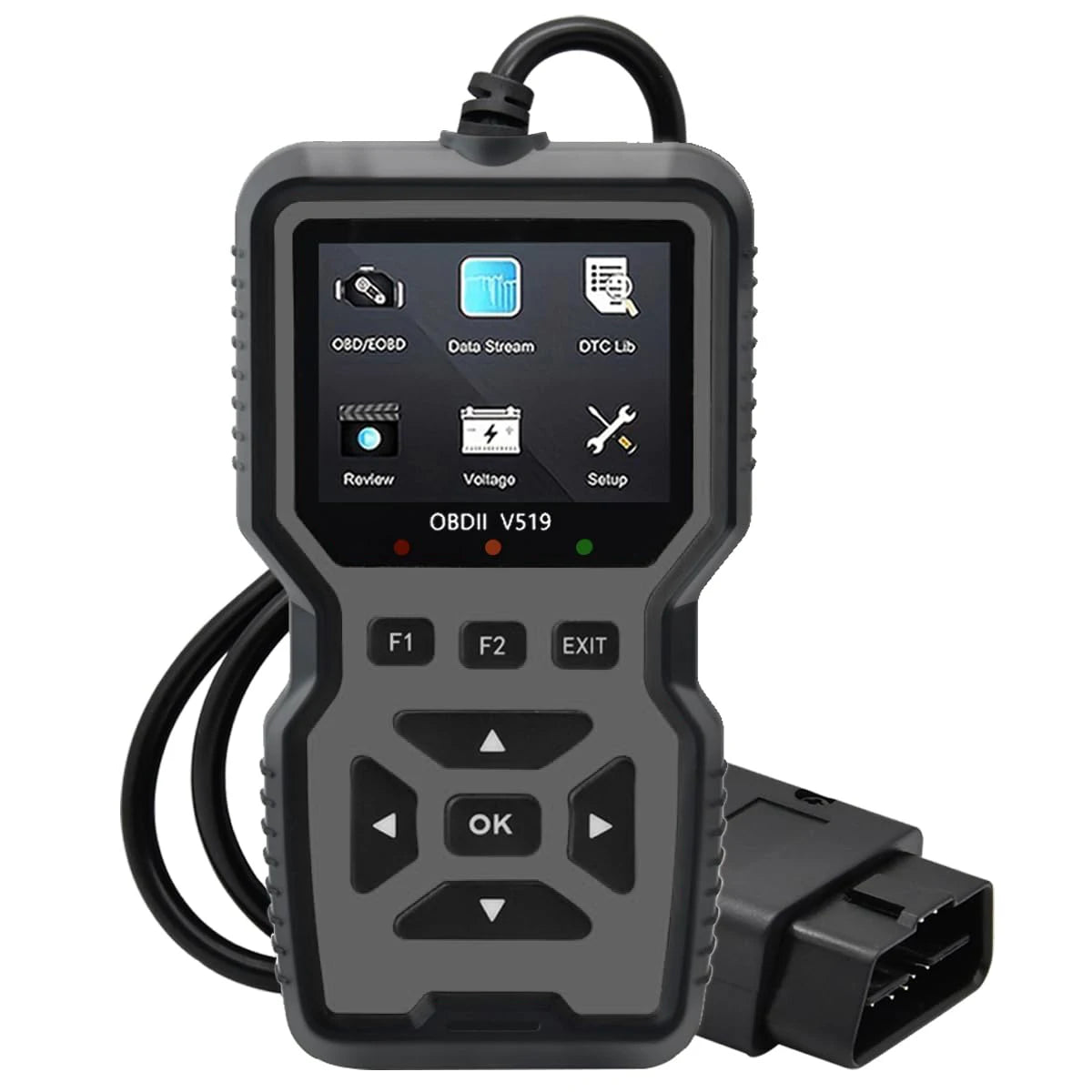
V519 OBD2 Diagnostic Scanner | Code Reader for Cars 1996+
V519 OBD2 Diagnostic Scanner | Code Reader for Cars 1996+
Couldn't load pickup availability
V519 Professional OBD2 Diagnostic Tool – Read & Reset Engine Codes Instantly
Take control of your vehicle's health with the V519 OBD2 Diagnostic Scanner. Whether you're a professional mechanic or a DIY car enthusiast, this compact code reader gives you real-time insight into your vehicle's performance — no batteries required, no complicated setup. Simply plug into your OBD2 port and get to work.
Why Choose the V519 OBD2 Scanner?
- Universal Compatibility: Works with all OBD2/EOBD compliant petrol and diesel vehicles manufactured from 1996 onwards — cars, SUVs, light trucks, and more.
- Read & Clear Fault Codes: Instantly retrieves and resets Diagnostic Trouble Codes (DTCs), turning off that pesky Check Engine Light (CEL) with ease.
- Real-Time Data Stream: Monitor live engine data including RPM, vehicle speed, coolant temperature, oxygen sensor readings, and more — all in real time.
- Mode 6 & Mode 8 Support: Access advanced on-board diagnostic test results for enhanced troubleshooting beyond basic code reading.
- No Battery Required: Powers directly from the vehicle's OBD2 port — no external power source or batteries needed.
- I/M Readiness Check: Quickly verify if your vehicle is ready for emissions testing, saving you time and money at the inspection station.
- Freeze Frame Data: Capture a snapshot of sensor data at the moment a fault code was triggered for accurate diagnosis.
- Wired Reliability: A direct, wired connection ensures stable, uninterrupted communication with your vehicle's ECU — no Bluetooth dropouts or pairing issues.
- Compact & Portable: Lightweight design fits easily in your glove box, tool bag, or garage shelf.
Key Specifications
- Model: V519
- Protocols Supported: OBD2 / EOBD (ISO 9141-2, ISO 14230, ISO 15765, SAE J1850 PWM & VPW)
- Modes Supported: Mode 1–9 including Mode 6 (On-Board Monitoring Test Results) & Mode 8 (Control of On-Board System)
- Vehicle Compatibility: 1996 and newer OBD2-compliant vehicles
- Power Source: Powered via OBD2 diagnostic port (no battery required)
- Wireless Function: None (wired connection)
- Country of Origin: Made in Mainland China
What Can You Diagnose?
The V519 supports a comprehensive range of diagnostic functions, including:
- Engine fault code reading and clearing
- Real-time data stream monitoring
- I/M readiness status for emissions testing
- O2 sensor test results
- Freeze frame data retrieval
- VIN (Vehicle Identification Number) retrieval
- On-board monitoring test results (Mode 6)
Who Is This For?
The V519 is ideal for:
- DIY home mechanics wanting to diagnose issues before visiting a garage
- Professional technicians needing a fast, reliable code reader on the go
- Car owners wanting to check emissions readiness before their MOT or smog test
- Fleet managers monitoring multiple vehicles
Explore More Diagnostic & Automotive Tools
Check out these related products from our store:
Authoritative Resource
For more information on vehicle emissions standards and OBD2 compliance, visit the U.S. Environmental Protection Agency – OBD Information.
Frequently Asked Questions
Q: Is the V519 OBD2 scanner compatible with my car?
A: The V519 OBD2 diagnostic tool is compatible with all OBD2/EOBD compliant vehicles manufactured from 1996 onwards, including petrol and diesel cars, SUVs, and light trucks sold in the US, Europe, and beyond.
Q: Do I need batteries or a separate power supply for the V519 scanner?
A: No — the V519 OBD2 code reader draws power directly from your vehicle's OBD2 diagnostic port, so no batteries or external power supply are required.
Q: Can the V519 turn off the Check Engine Light?
A: Yes. The V519 can both read and clear Diagnostic Trouble Codes (DTCs), which will turn off the Check Engine Light (MIL) once the underlying issue has been addressed.
Q: What is Mode 6 and why is it useful?
A: Mode 6 provides access to on-board monitoring test results for specific components not continuously monitored. This is particularly useful for identifying intermittent faults and preparing for emissions inspections before official testing.