Peaceful Pleasures Health and Wellness
V511 OBD2 Scanner & Battery Tester | Engine Fault Code Reader
V511 OBD2 Scanner & Battery Tester | Engine Fault Code Reader
Couldn't load pickup availability
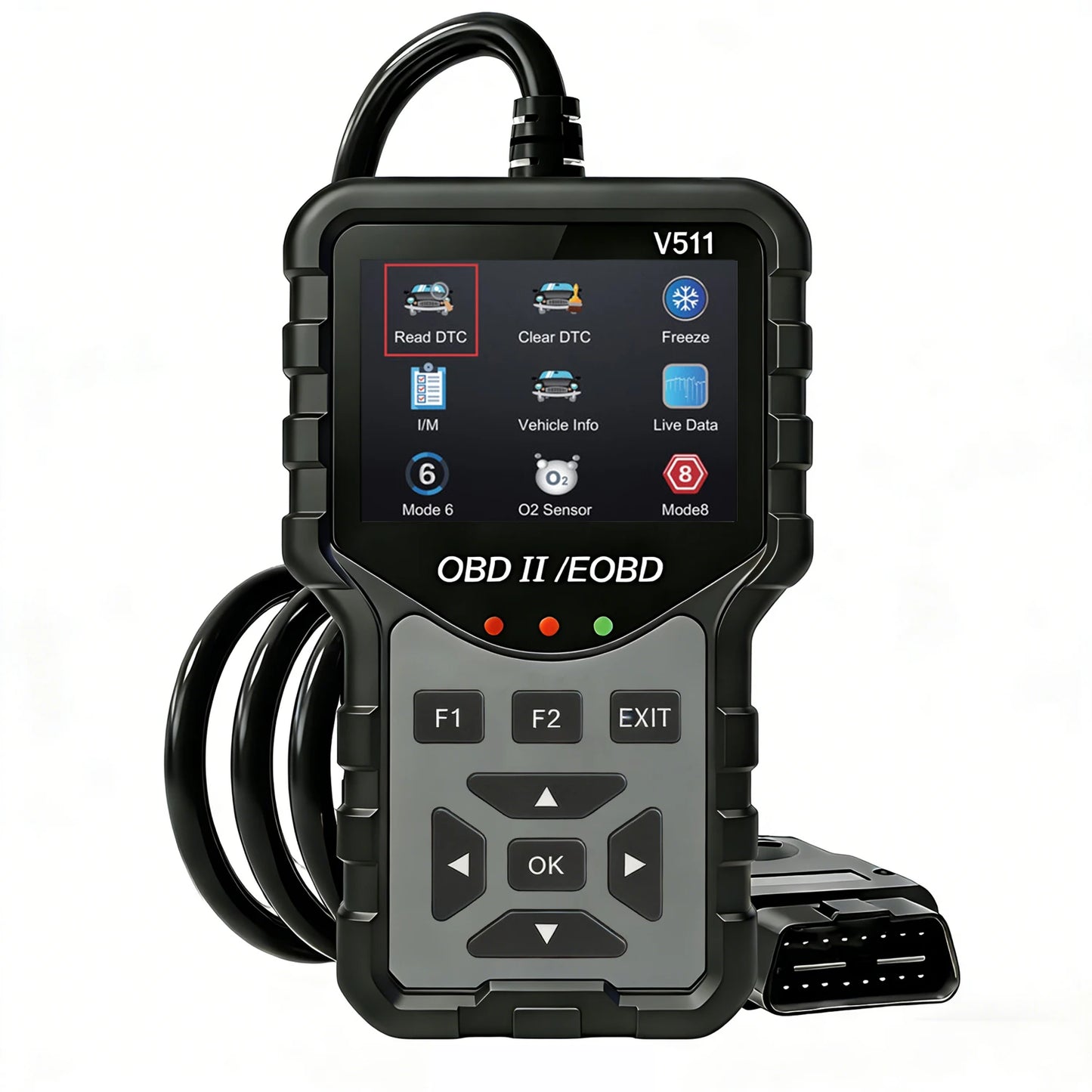
V511 OBD2 Diagnostic Scan Tool with Built-In Battery Tester
Take full control of your vehicle's health with the V511 OBD2 Diagnostic Scan Tool. Whether you're a seasoned mechanic or a everyday driver who wants to avoid costly garage visits, the V511 gives you instant access to your car's onboard diagnostics — right from the palm of your hand. Compatible with all OBDII protocol vehicles manufactured since 1996, this versatile scanner requires no batteries and powers directly from your car's OBD2 port.
Key Features
- Built-In Battery Tester: Check your vehicle's 12V battery voltage in real time — no separate tool needed.
- Engine Fault Code Reader: Quickly read and clear Diagnostic Trouble Codes (DTCs) to turn off that check engine light with confidence.
- Real-Time Live Data: Monitor engine parameters as they happen — RPM, coolant temperature, vehicle speed, oxygen sensor data, and more.
- DTC Query Function: Instantly look up the meaning of any fault code directly on the device — no smartphone or internet connection required.
- Snapshot / Freeze Frame Data: Capture the exact engine conditions recorded at the moment a fault code was triggered for smarter troubleshooting.
- Universal OBD2 Compatibility: Works with all vehicles sold in the US, EU, and Asia using standard OBDII protocols (CAN, ISO, PWM, VPW, KWP2000).
- No Battery Required: Powers directly via your car's OBD2 diagnostic port — always ready when you are.
- Compact & Plug-and-Play: Lightweight handheld design — simply plug in, power on, and start diagnosing.
What's in the Box?
- 1 × V511 OBD2 Diagnostic Scanner
- 1 × User Manual
Specifications
- Compatibility: All OBDII protocol vehicles (1996 and newer)
- Protocols Supported: CAN, ISO9141-2, KWP2000, J1850 PWM, J1850 VPW
- Battery Tester: 12V automotive battery voltage check
- Power Source: OBD2 port (no external battery required)
- Wireless: No
- Country of Origin: Made in Mainland China
Why Choose the V511?
Most entry-level scanners either read codes or test batteries — the V511 does both, making it one of the most practical and cost-effective tools to keep in your glove box. Stop guessing what that warning light means and stop paying dealership fees just for a scan. With the V511, you get professional-grade diagnostics at a fraction of the cost.
For more information on vehicle OBD2 standards and emissions diagnostics, visit the U.S. EPA On-Board Diagnostics (OBD) Resource.
You May Also Like
- 1-In-2-Out HDMI Splitter Cable 1080P 3D – TV Monitor Projector
- 1/2 Channel Tuya WiFi Smart Relay Switch | 16A, Alexa & Google Home
Frequently Asked Questions
Q: What vehicles is the V511 OBD2 scanner compatible with?
A: The V511 is compatible with all vehicles that use the standard OBDII diagnostic protocol, which includes virtually all cars and light trucks sold in the United States since 1996, as well as most OBDII-compliant vehicles in Europe and Asia. It supports all five standard OBD2 protocols: CAN, ISO9141-2, KWP2000, J1850 PWM, and J1850 VPW.
Q: Does the V511 require batteries or a separate power source?
A: No — the V511 OBD2 scanner draws power directly from your vehicle's OBD2 diagnostic port. There are no batteries to charge or replace. Simply plug it into the OBD2 port (usually located under the dashboard near the steering column) and it powers on automatically.
Q: Can the V511 turn off the check engine light?
A: Yes. The V511 can read and clear Diagnostic Trouble Codes (DTCs), which will turn off the check engine light once the underlying issue has been resolved. It also displays the meaning of each code on-device so you understand exactly what triggered the warning before clearing it.
Q: What is the snapshot/freeze frame function on the V511?
A: The snapshot (freeze frame) function captures and stores a snapshot of key engine sensor data — such as RPM, engine load, fuel trim, and coolant temperature — at the exact moment a fault code was triggered. This helps you or your mechanic pinpoint the conditions that caused the problem, making diagnosis far more accurate and efficient.