Peaceful Pleasures Health and Wellness
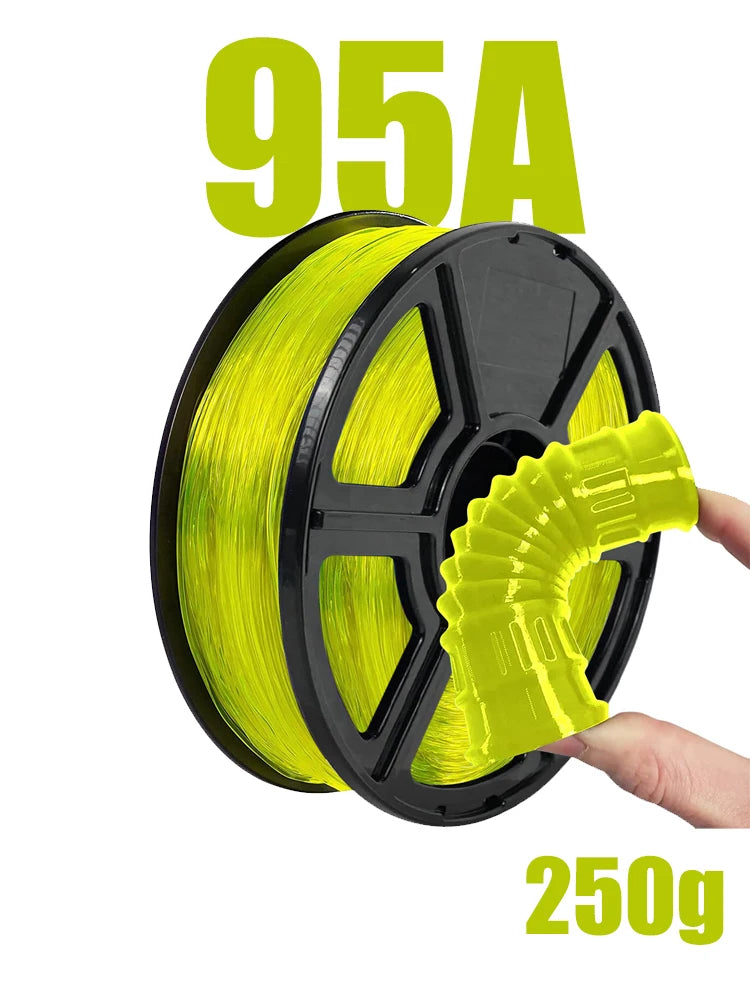
TPU 1.75mm Flexible 3D Printer Filament Transparent Yellow 95A 250g
TPU 1.75mm Flexible 3D Printer Filament Transparent Yellow 95A 250g
Couldn't load pickup availability
3D Maliang TPU 1.75mm Flexible Filament – Transparent Yellow | 95A | 250g Spool
Unlock the full potential of your 3D printer with 3D Maliang's TPU 1.75mm Flexible Filament in Transparent Yellow. Engineered to a tight ±0.03mm diameter tolerance, this 95A hardness TPU filament delivers consistent, clog-free extrusion and stunningly flexible, durable prints every time. Whether you're printing phone cases, wearables, gaskets, or artistic models, this filament gives you the flexibility and clarity you need.
Why Choose 3D Maliang TPU Filament?
- Ultra-Precise Diameter: ±0.03mm tolerance ensures smooth, jam-free feeding and dimensional accuracy.
- 95A Shore Hardness: The ideal balance of flexibility and rigidity — bends without breaking, snaps back to shape.
- Transparent Yellow Color: Beautiful semi-transparent finish for creative, eye-catching designs.
- 250g / 0.55 lbs Spool: Perfect starter or top-up size, neatly wound for tangle-free printing.
- 1-Year Shelf Life: Carefully packaged to retain moisture-resistance and print quality over time.
- No High-Concern Chemicals: Formulated without hazardous substances for safer home and studio use.
- Wide Compatibility: Works with most FDM 3D printers that support 1.75mm filament (Creality, Prusa, Bambu Lab, Ender series, and more).
Product Specifications
| Brand | 3D Maliang |
| Material | TPU (Thermoplastic Polyurethane) |
| Shore Hardness | 95A |
| Diameter | 1.75mm ± 0.03mm |
| Color | Transparent Yellow |
| Spool Weight | 250g (0.55 lbs) |
| Form | Solid Filament |
| Shelf Life | 1 Year |
| High-Concern Chemicals | None |
| Country of Origin | Made in Mainland China |
Printing Tips for Best Results
- Recommended Nozzle Temp: 220–240°C (adjust to your printer's optimal range)
- Bed Temperature: 30–60°C (heated bed recommended for adhesion)
- Print Speed: Slower speeds (20–40mm/s) recommended for flexible filament
- Storage: Keep sealed in a cool, dry place away from humidity when not in use
Great For
- Phone & device cases
- Wearables & straps
- Gaskets, seals & grips
- Flexible artistic models and props
- Prototyping flexible components
Related Products You May Like
- "I'M Fine" Funny Sarcastic Waterproof Laptop Stickers – PVC
- 1-Inch Round Dot Label Stickers – 500/Roll, 10 Colors
For more information on safe use of 3D printing materials and plastics, visit the U.S. Consumer Product Safety Commission (CPSC) for product safety guidelines.
Frequently Asked Questions
Q: Is 3D Maliang TPU 1.75mm filament compatible with my FDM printer?
A: Yes! The 3D Maliang TPU 1.75mm flexible filament is compatible with the vast majority of FDM desktop 3D printers that use 1.75mm filament, including popular brands like Creality Ender, Prusa, Bambu Lab, Anycubic, and more. Always check your printer's flex filament capability (a direct-drive extruder is recommended for best results with TPU).
Q: What is 95A Shore hardness and what does it mean for my prints?
A: Shore 95A is a measure of rubber/elastomer hardness. At 95A, this TPU filament sits in a semi-flexible range — it has enough flex to bend and absorb impact, but is firm enough to hold structure and detail. It's ideal for phone cases, grips, wearables, and functional parts that need some give without being overly rubbery.
Q: How should I store TPU filament to maintain quality?
A: TPU is hygroscopic, meaning it absorbs moisture from the air, which can cause bubbling and poor print quality. Store your 3D Maliang TPU filament in a sealed bag or airtight container with silica gel desiccant packets, in a cool, dry location. The product has a shelf life of 1 year when stored properly.
Q: What print settings work best for TPU 95A flexible filament?
A: For best results with this 1.75mm TPU filament, use a nozzle temperature of 220–240°C and a bed temperature of 30–60°C. Reduce your print speed to 20–40mm/s and disable retraction or use minimal retraction to avoid filament jams. A direct-drive extruder is strongly preferred over a Bowden setup for flexible filaments.