Peaceful Pleasures Health and Wellness
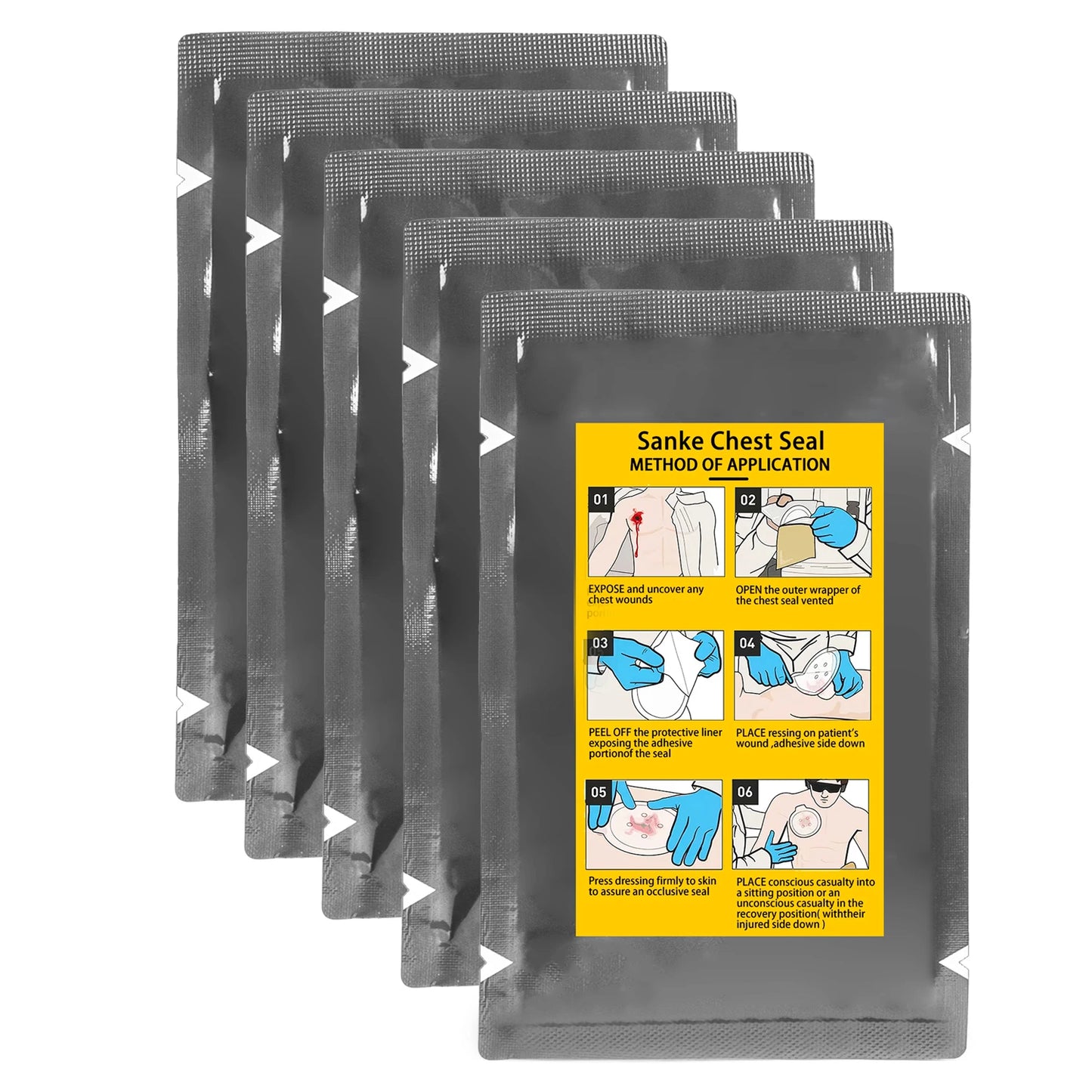
SANKE RESCUE Vented Chest Seal – Sterile IFAK Trauma Dressing
SANKE RESCUE Vented Chest Seal – Sterile IFAK Trauma Dressing
Couldn't load pickup availability
SANKE RESCUE Vented Chest Seal — Sterile Occlusive Trauma Dressing
Be prepared when it matters most. The SANKE RESCUE Vented Chest Seal is a sterile, military-grade occlusive dressing designed for first responders, tactical personnel, outdoor adventurers, and anyone building a serious Individual First Aid Kit (IFAK). Whether you're stocking a go-bag, vehicle kit, or emergency trauma kit, this professional-quality chest seal delivers the reliability you need in a critical moment.
Made in Mainland China.
What Is a Vented Chest Seal & Why Does It Matter?
A vented chest seal is a one-way valve occlusive dressing used by first responders to manage penetrating torso trauma — including chest, back, upper abdomen, and neck wounds that compromise the pleural cavity. The one-way vent design allows air to escape while preventing it from re-entering, helping to manage the risk of tension pneumothorax — a rapidly life-threatening buildup of air between the lung and chest wall.
Unlike improvised dressings, a purpose-built occlusive chest seal features high-tack medical adhesive that maintains a strong seal even in the presence of moisture and blood, giving you a critical time advantage while awaiting definitive medical care.
Key Features
- Sterile Packaging: Each seal is individually packaged in a sterile pouch, ready for immediate deployment.
- One-Way Vented Design: Allows trapped air to exit the pleural space while blocking external air from entering — critical for managing tension pneumothorax risk.
- High-Tack Occlusive Adhesive: Strong, skin-conforming adhesive maintains a reliable seal even in wet or bloody conditions.
- Military Trauma Tested: Engineered to meet the demanding standards used in tactical and battlefield first aid protocols (TCCC/TECC).
- IFAK Refill Ready: Compact, lightweight form factor fits standard IFAK pouches and trauma kits.
- Large Coverage Area: Wide-diameter seal covers wounds of varying sizes across the torso and back.
- Easy Peel-and-Apply: Intuitive application even under stress — no special tools required.
Who Needs a Chest Seal in Their Kit?
- Military personnel & veterans building IFAK or blow-out kits
- Law enforcement & security professionals
- EMTs, paramedics, and first responders
- Hunters, hikers, and backcountry adventurers
- Preppers & emergency preparedness households
- Wilderness medicine & TCCC/Stop the Bleed course students
How to Apply a Chest Seal — 10-Step Overview
- Ensure Safety: Don gloves and eye protection if available. Move the patient from immediate hazards.
- Address Life Threats First: Control major bleeding with a tourniquet and ensure an open airway before treating the chest wound.
- Assess the Patient: Check for multiple wounds — gunshot wounds may have both an entry and exit wound. Examine the front and back.
- Cover the Wound: Use your gloved hand to temporarily cover the chest wound while you prepare the seal.
- Expose the Wound: Remove or cut away clothing using trauma shears to ensure direct skin contact.
- Clean the Area: Quickly wipe away excess blood and moisture with gauze to improve adhesion.
- Center and Apply the Seal: Place the wound at the center of the seal and press edges firmly, working outward.
- Monitor Breathing: Watch for respiratory distress. If needed, "burp" the seal momentarily to allow trapped air to escape.
- Consider Advanced Interventions: Trained providers should be prepared to perform needle decompression if indicated.
- Evacuate Immediately: Transport to definitive medical care as quickly as safely possible.
Product Specifications
- Brand: Sanke Rescue
- Type: Vented Occlusive Chest Seal
- Sterile: Yes — individually sealed packaging
- Use Case: Penetrating torso trauma, IFAK refill, tactical first aid
- Origin: Made in Mainland China
Complete Your Trauma Kit
Building a full emergency kit? Pair this chest seal with other lifesaving supplies. Check out our related wall-art and preparedness accessories:
- "Better Days Are Coming" Motivational Canvas Wall Art Print — keep your space inspired.
- "Hey, You Got This" Motivational Canvas Wall Art Print — because mindset matters.
External Resources
For authoritative guidance on emergency preparedness and trauma response, visit the Ready.gov Emergency Supply Kit Guide — the official U.S. government resource for building comprehensive emergency preparedness kits.
Additional trauma care training information is available through the U.S. Consumer Product Safety Commission (CPSC).
Frequently Asked Questions
Q: What is a vented chest seal used for in a first aid or IFAK kit?
A: A vented chest seal (also called an occlusive chest dressing) is used to manage penetrating trauma to the torso — particularly wounds that create an opening into the pleural cavity. The one-way vent allows trapped air to escape while preventing outside air from entering, helping stabilize the patient's breathing until advanced medical care is available. It is a core component of military and civilian IFAK (Individual First Aid Kit) trauma protocols.
Q: Is this chest seal sterile, and how is it packaged?
A: Yes. The SANKE RESCUE Vented Chest Seal comes in individually sealed sterile packaging, making it ready for immediate use in an emergency. The sterile barrier maintains product integrity until the moment of deployment, which is critical in field trauma care.
Q: Can this chest seal be used by civilians, or is it only for military/EMS use?
A: While this product is designed to meet military and professional first-responder standards, it is available for civilians who want to build comprehensive emergency kits. It is ideal for preppers, hunters, hikers, wilderness travelers, and anyone taking TCCC, Stop the Bleed, or wilderness medicine courses. Proper training is strongly recommended before including any trauma device in your kit.
Q: What is the difference between a vented and non-vented chest seal?
A: A vented chest seal features a one-way valve that passively allows air to escape from the pleural space while blocking air from entering — making it the preferred option for the front (anterior) chest wound. A non-vented chest seal creates a complete occlusive barrier with no airflow in either direction, and is typically used on the back (exit wound). Having both types in your IFAK is considered best practice in tactical trauma care.
Q: How do I store the SANKE RESCUE Chest Seal to ensure it stays effective?
A: Store the chest seal in its original sealed packaging in a cool, dry location away from direct sunlight and extreme temperatures. Check the expiration date periodically and replace as needed. Keeping it in a dedicated IFAK pouch helps protect the packaging from punctures and moisture during transport.