Peaceful Pleasures Health and Wellness
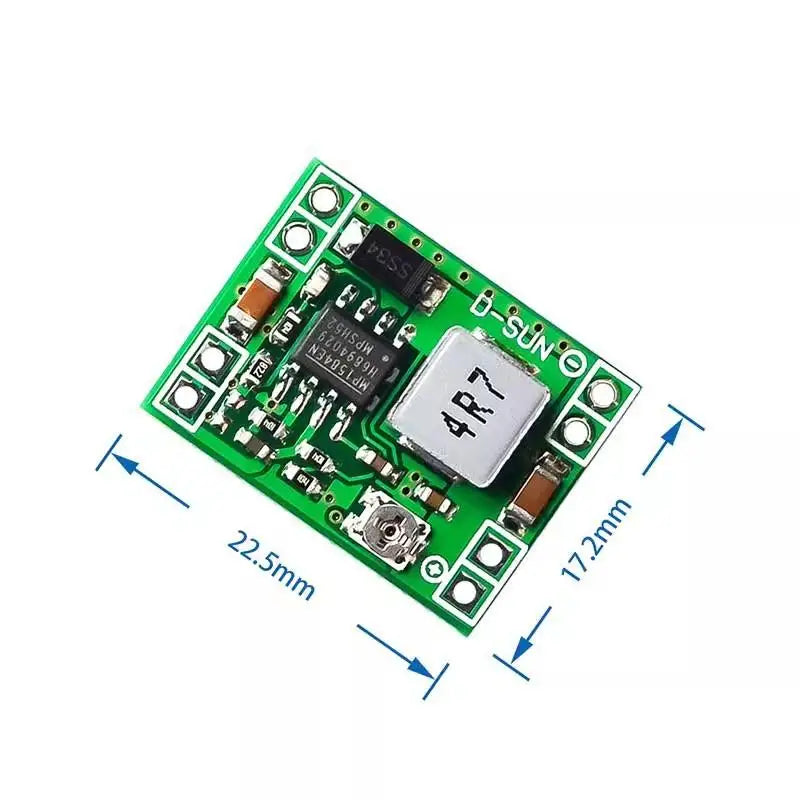
MP1584EN DC-DC Buck Converter 3A Adjustable Voltage Regulator
MP1584EN DC-DC Buck Converter 3A Adjustable Voltage Regulator
Couldn't load pickup availability
MP1584EN Mini DC-DC Step Down Converter – 4.5–28V to 0.8–20V, 3A
Power your DIY electronics, Arduino projects, RC cars, and automotive builds with precision using the MP1584EN Mini DC-DC Step Down (Buck) Converter. This compact voltage regulator module lets you dial in the exact output voltage your device needs — all in a module smaller than a postage stamp.
Why Choose This Step Down Module?
- Fully Adjustable Output: Set your output voltage anywhere from 0.8V to 20V to match your specific project requirements — no fixed output limitations.
- Wide Input Voltage Range: Accepts 4.5V to 28V input, making it compatible with common battery packs, car power systems, and bench supplies.
- High Current Capacity: Delivers up to 3A peak current (1.8A continuous long-term), ideal for powering microcontrollers, sensors, motors, and LED strips.
- High Conversion Efficiency: Up to 92% efficiency with a 1.5MHz switching frequency keeps heat low and your power budget in check.
- Ultra-Compact Design: At just ~22 × 17mm, this module fits into even the tightest enclosures, chassis, or breadboard builds.
- Low Output Ripple: Only 30mV ripple (unloaded) ensures stable, clean power for sensitive electronics.
- Durable Construction: Built with quality plastic and metal components for reliable, long-lasting performance.
Technical Specifications
| Input Voltage | 4.5V – 28V (must exceed output voltage) |
| Output Voltage | 0.8V – 20V (adjustable) |
| Output Current | Max 3A peak; 1.8A continuous |
| Conversion Efficiency | Up to 92% |
| Switching Frequency | 1.5 MHz |
| Output Ripple | ~30mV (unloaded) |
| Output Interface | Solder pads |
| Dimensions | ~22 × 17mm |
| Material | Plastic + Metal |
| Package Contents | 1 × MP1584EN Step Down Module |
| Country of Origin | Made in Mainland China |
Perfect For
- Arduino, Raspberry Pi & microcontroller power supplies
- DIY car and automotive 12V/24V voltage regulation
- RC vehicles and hobby electronics
- LED driver circuits
- Portable battery-powered devices
- Any project requiring a reliable buck/step-down regulator
Related Products You May Like
- 0.1MHz–6GHz 20dB LNA RF Low Noise Amplifier Preamplifier Module
- 1 to 5 SATA Power Splitter Cable 18AWG | HDD SSD Extension
For more information on electronics safety standards relevant to low-voltage modules, visit the U.S. Consumer Product Safety Commission (CPSC).
Learn more: Voltage regulator
Frequently Asked Questions
Q: What is the MP1584EN DC-DC step down converter used for?
A: The MP1584EN step down (buck) converter is used to reduce a higher DC input voltage (4.5–28V) to a lower, adjustable output voltage (0.8–20V). It's commonly used in DIY electronics, Arduino and Raspberry Pi projects, automotive systems, RC cars, and LED driver circuits where a stable, lower voltage is needed from a higher-voltage power source.
Q: How do I adjust the output voltage on this module?
A: The output voltage is adjusted by turning the small onboard potentiometer (trimmer screw) with a small flat-head screwdriver. Always use a multimeter to measure the output voltage while adjusting, and ensure your input voltage is always higher than your desired output voltage before connecting any load.
Q: What is the maximum continuous current this MP1584EN module can supply?
A: The module can supply a peak current of 3A, but for safe, continuous long-term operation it is recommended to keep the load at or below 1.8A. Running at the peak 3A rating for extended periods without additional heatsinking may reduce the module's lifespan.
Q: Can I use this module in a car or automotive application?
A: Yes! This module is well-suited for automotive and DIY car applications. A standard 12V car battery falls well within the 4.5–28V input range, allowing you to step down to 5V for USB-powered devices, microcontrollers, or sensors. Just ensure proper insulation and secure mounting in your vehicle installation.