Peaceful Pleasures Health and Wellness
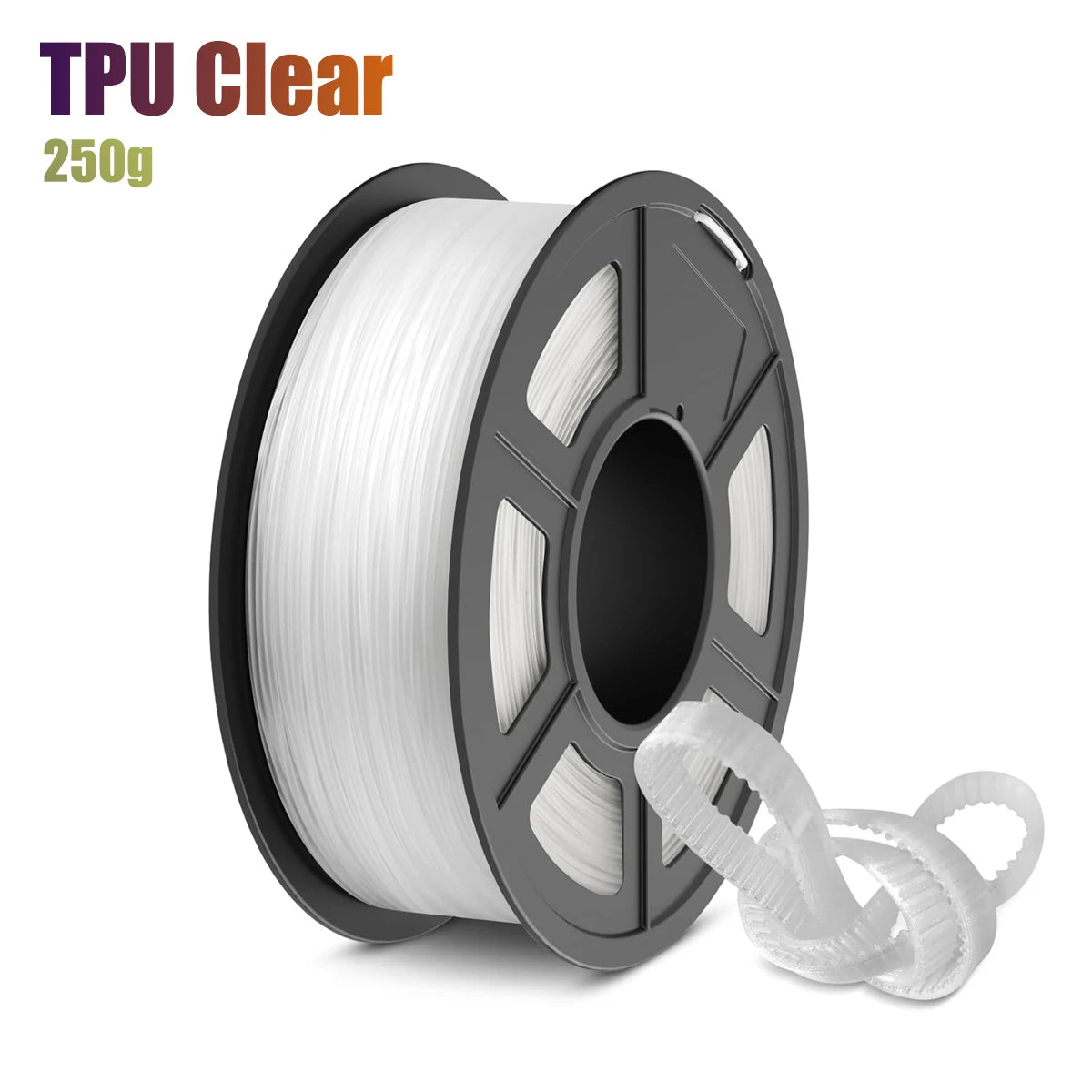
DINGSUN 95A Flexible TPU Filament 1.75mm | Fast & Precise
DINGSUN 95A Flexible TPU Filament 1.75mm | Fast & Precise
Couldn't load pickup availability
DINGSUN 3D High-Speed 95A Flexible TPU 3D Printer Filament 1.75mm
Take your 3D printing to the next level with DINGSUN 3D's High-Speed 95A TPU Filament. Engineered for creators who demand both speed and precision, this flexible thermoplastic polyurethane filament delivers outstanding elasticity, durability, and dimensional accuracy — all in one reliable spool. Whether you're printing phone cases, gaskets, shoe insoles, or custom flexible parts, this filament handles it all with ease.
Made in Mainland China.
Why Choose DINGSUN 3D TPU Filament?
- High-Speed Printing: Optimized 95A Shore hardness TPU formula supports faster print speeds without sacrificing quality, cutting down your print time significantly.
- Superior Flexibility & Durability: Produces prints that are both elastic and tough — perfect for parts that need to bend, stretch, or absorb impact without cracking or breaking.
- Precision Dimensional Accuracy ±0.03mm: Tight tolerances ensure consistent filament diameter throughout the entire spool, resulting in smooth extrusion, fewer jams, and highly accurate prints every time.
- Versatile Weight Options: Available in 200g, 250g, 500g, and 1000g spools — choose the size that best matches your project, whether it's a quick prototype or a large production run.
- Wide Compatibility: Compatible with most FDM 3D printers that accept 1.75mm filament, including Bambu Lab, Creality, Prusa, Ender, and more.
- No High-Concern Chemicals: Formulated without any high-concern chemicals for a safer printing experience.
Filament Specifications
- Brand: DINGSUN 3D
- Material: TPU (Thermoplastic Polyurethane)
- Shore Hardness: 95A
- Diameter: 1.75mm
- Dimensional Accuracy: ±0.03mm
- Available Weights: 200g / 250g / 500g / 1000g
- Form: Solid filament on spool
- High-Concern Chemicals: None
- Origin: Mainland China
Perfect For
- Phone cases & protective covers
- Custom gaskets, seals & O-rings
- Shoe soles, insoles & wearables
- RC car tires & flexible drone parts
- Cable management & strain reliefs
- Medical & ergonomic prototyping
Related Products You May Like
- 1.0" Beadlock Wheel Hubs 4pcs for RC Crawlers TRX4M SCX24 — great companion for flexible TPU RC tire prints
- 1/10 RC Car Negative Pressure Shock Dampers – Metal Pack of 2 — pair custom-printed TPU parts with precision RC components
Learn More About 3D Printing Materials
For a deeper understanding of additive manufacturing materials and safety standards, visit the NIST Additive Manufacturing Resource — a trusted government resource on 3D printing technology and material standards.
Frequently Asked Questions
Q: What printers are compatible with DINGSUN 3D 95A TPU 1.75mm filament?
A: This 1.75mm TPU filament is compatible with most FDM (Fused Deposition Modeling) 3D printers, including popular brands such as Creality Ender series, Prusa i3 MK3/MK4, Bambu Lab, Anycubic, Elegoo, and many more. We recommend using a direct-drive extruder for best results with flexible TPU filament, though many Bowden-style printers can also handle 95A TPU with the right settings.
Q: What print temperature and settings should I use for 95A TPU filament?
A: Typically, 95A TPU filament prints best at a nozzle temperature of 220–240°C and a bed temperature of 30–60°C. Print speed should be moderate (30–50mm/s is recommended for optimal results). Disable retraction or use minimal retraction settings to prevent clogging. Always refer to your printer's manual for model-specific guidance.
Q: What is the difference between 95A and softer TPU filaments like 85A or 87A?
A: The Shore A hardness rating indicates the stiffness of the material. 95A TPU is semi-flexible — firmer than 85A or 87A variants, making it easier to feed through Bowden extruders and print at higher speeds, while still offering excellent elasticity and impact resistance. It's ideal for functional parts that need flexibility without being too soft.
Q: Which spool size should I choose — 200g, 250g, 500g, or 1000g?
A: The right spool size depends on your project. For small prototypes or first-time users, the 200g or 250g spool is a great starting point. The 500g spool suits medium-sized projects or regular hobby use. The 1000g (1kg) spool is ideal for production runs, large prints, or makers who print frequently and want the best value per gram.