Peaceful Pleasures Health and Wellness
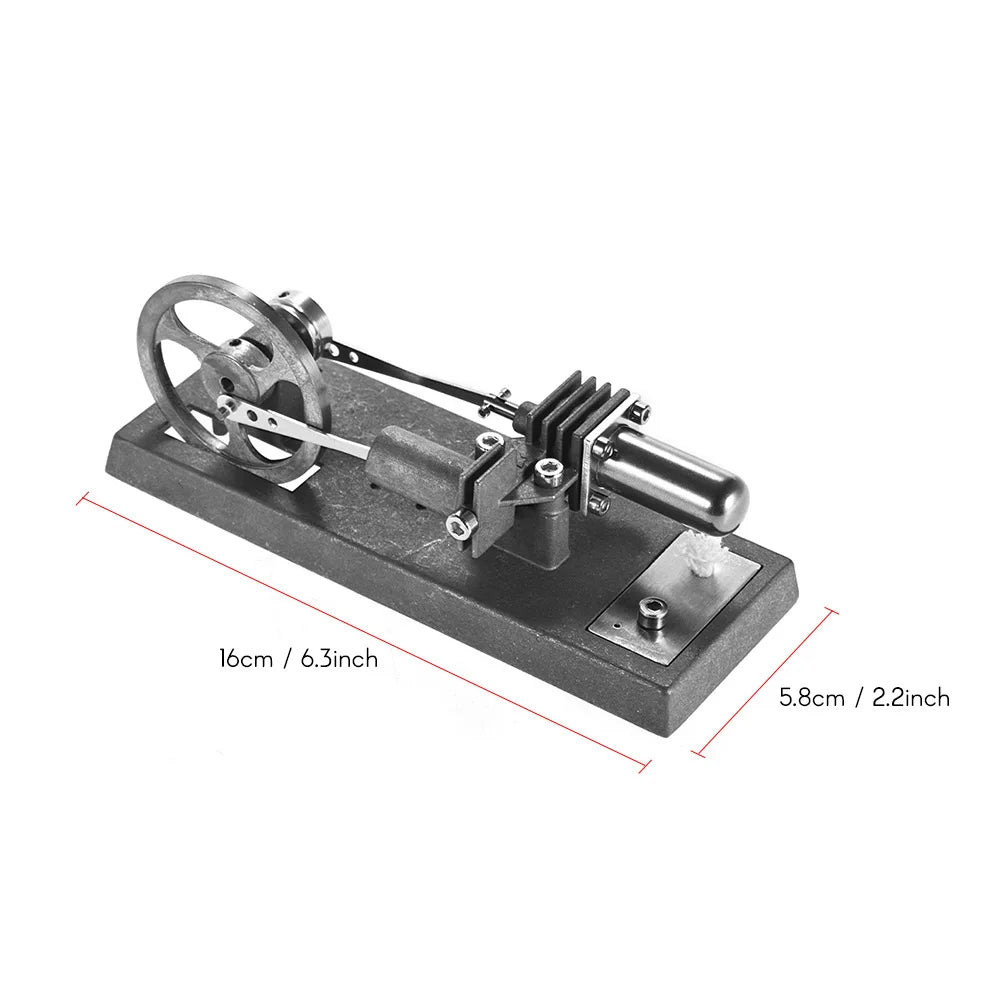
Mini Hot Air Stirling Engine DIY Kit – STEM Physics Model
Mini Hot Air Stirling Engine DIY Kit – STEM Physics Model
Couldn't load pickup availability
Build & Discover: Mini Hot Air Stirling Engine Model Kit
Bring thermodynamics to life with this hands-on Mini Hot Air Stirling Engine DIY Assembly Kit. Designed for students, hobbyists, and curious minds alike, this full-metal self-assembly model demonstrates how heat energy converts into mechanical motion — making complex physics concepts visual, tangible, and exciting.
Whether you're a teacher looking for a classroom demonstration tool, a parent seeking an engaging STEM project, or a science enthusiast who loves building precision mechanical models, this Stirling engine kit delivers an unforgettable learning experience.
Key Features
- Full Metal Construction – Durable, high-quality metal body for long-lasting performance and a premium feel.
- Self-Assembly Design – Build it yourself to develop fine motor skills, mechanical aptitude, and problem-solving abilities.
- Built-in Alcohol Tank – Includes a flame wick and fuel shield for easy, controlled operation (alcohol not included).
- Clear Physics Demonstration – Visually explains the Stirling cycle, thermodynamics, and heat-to-motion energy conversion.
- Complete Kit – Everything you need to assemble the engine is included, along with a full English user manual.
- Great for All Ages – Perfect for middle school, high school, university-level physics education, and adult hobbyists.
Specifications
- Model: QX6
- Base Plate Size: 16 × 5.8 cm (6.3 × 2.2 in)
- Package Size: 20.5 × 12 × 11.2 cm (8.1 × 4.7 × 4.4 in)
- Package Weight: 456 g / 16.1 oz
- Country of Origin: Made in Mainland China
What's in the Box
- 1× Base Plate
- 1× Big Flywheel & 1× Small Flywheel
- 1× Cylinder Kit, Heating Tube, Piston, Piston Bar
- 2× Connecting Rods
- 1× Fuel Shield, Sealing Panel, Cylinder Pad
- 1× Flywheel Axis + Rod, Driving Piston
- 4× M3 Screws & 4× M4 Screws
- 1× Hose Connector, 2× Axis, 1× O Ring
- Fasteners, Pads, Flame Wick, Water Bottle
- 1× English User Manual
Note: Alcohol fuel is NOT included and must be purchased separately.
Explore More from Our Store
Looking for more educational and creative tools? Check out our 0.38mm Fine Nib Calligraphy Fountain Pen for creative writing projects, or explore our 1-Inch Round Dot Label Stickers for organizing your workshop and project parts.
Learn More About Thermodynamics & STEM Education
Curious about how Stirling engines and heat engines work? The U.S. Department of Energy offers excellent resources on thermodynamics and energy conversion. You can also explore STEM education resources at NASA's STEM Engagement page to further inspire young scientists and engineers.
Frequently Asked Questions
Q: What age group is this Stirling engine DIY kit suitable for?
A: This hot air Stirling engine model kit is recommended for ages 14 and up. It is ideal for middle school, high school, and university students studying physics, as well as adult hobbyists and collectors who enjoy precision mechanical assembly projects.
Q: What fuel does this Stirling engine use, and is it included?
A: This Stirling engine model is powered by alcohol (ethanol/isopropyl alcohol). The kit includes a built-in alcohol tank, fuel shield, and flame wick — however, the alcohol itself is NOT included and must be sourced separately from a local hardware or pharmacy store.
Q: How difficult is the self-assembly process for this DIY Stirling engine kit?
A: The assembly is moderately straightforward and is designed to be completed by beginners with patience. A detailed English user manual is included to guide you step by step. The process itself is part of the educational experience, helping builders understand the mechanical components of a Stirling engine cycle.
Q: What physics concepts does this Stirling engine model demonstrate?
A: This model visually demonstrates the Stirling thermodynamic cycle, including the principles of heat-to-mechanical energy conversion, piston movement, flywheel momentum, and the relationship between temperature differentials and mechanical work — core topics in physics and engineering education.